
Security systems in Irish commercial safety 2026

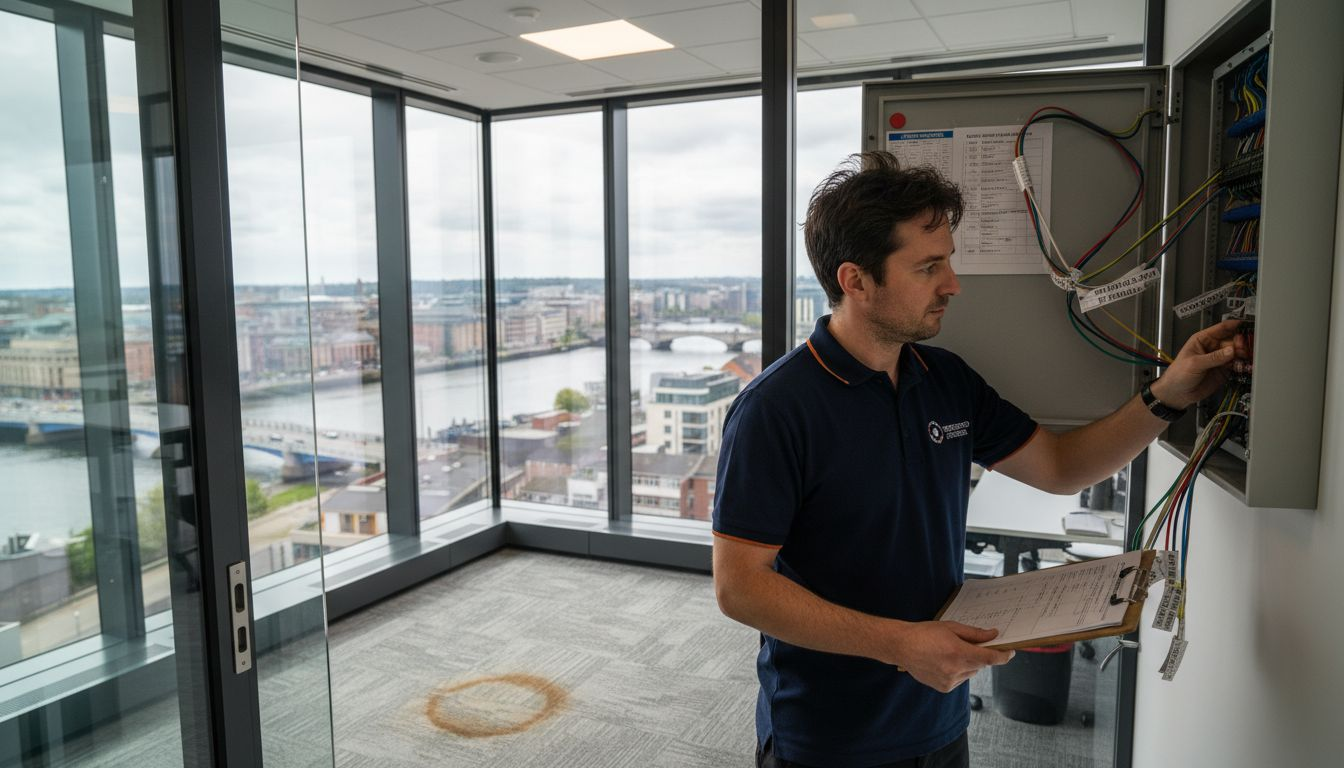
Businesses equipped with integrated security systems see a 60% reduction in burglary rates and a 40% decrease in fire related losses. Yet many Irish business owners still view these systems as expensive luxuries rather than essential safeguards. This misconception puts commercial premises at serious risk, especially as Irish fire safety regulations evolve throughout 2025 and 2026. This guide explores how security systems protect your business, the legal requirements you must meet, and practical steps to ensure compliance while reducing operational risks.
Table of Contents
Understanding The Role Of Security Systems In Commercial Fire And Safety
Legal And Regulatory Framework Governing Fire And Security Systems In Ireland
Compliance And Maintenance: Ensuring Effective Security System Operation
Designing Security Systems To Mitigate Risk And Ensure Certification Compliance
Secure Your Business With Compliant Fire And Security Solutions
Frequently Asked Questions About Security Systems In Ireland
Key takeaways
Point | Details |
Loss reduction | Integrated security systems cut burglary and fire losses by up to 60% and 40% respectively |
Maintenance requirements | Regular inspections and documentation are essential to maintain compliance and system effectiveness |
Updated regulations | New Irish fire safety regulations from 2025 require updated certifications and safety plans |
Legal responsibilities | Fire safety and security laws assign clear duties to business owners and facility managers |
Understanding the role of security systems in commercial fire and safety
Security systems serve as your first line of defence against both criminal activity and fire emergencies. These integrated solutions combine fire detection, alarms, CCTV surveillance, access control, and intruder alarms to create comprehensive protection for commercial premises. Each component works together to detect threats early, alert relevant parties, and enable rapid response before minor incidents escalate into major losses.
The financial and operational benefits extend beyond simple loss prevention. Businesses with properly maintained security systems experience fewer insurance claims, lower premiums, and minimal disruption to daily operations. When fire or security incidents do occur, documented system performance and maintenance records demonstrate due diligence to insurers and regulators. This protection proves especially valuable during investigations or legal proceedings.
Effective security systems integrate three core capabilities: detection of threats through sensors and monitoring, immediate alarm notification to occupants and emergency services, and coordinated response protocols that minimise damage and protect lives.
Many business owners assume security systems are prohibitively expensive or too complex for smaller operations. This misconception ignores the modular nature of modern systems and the significant costs of inadequate protection. A basic commercial fire system can be expanded over time as your business grows, whilst even entry level installations provide substantial risk reduction.
Common security system components include:
Fire detection sensors (smoke, heat, and carbon monoxide)
Automatic alarm systems with remote monitoring
CCTV cameras with recording and live viewing capabilities
Access control systems managing entry to sensitive areas
Intruder alarms protecting premises outside business hours
The National Fire Protection Association research confirms that businesses investing in integrated security infrastructure recover from incidents faster and maintain better relationships with insurers and regulatory bodies. Your system’s effectiveness depends on proper design, professional installation, and consistent maintenance rather than simply purchasing the most expensive equipment available.
Legal and regulatory framework governing fire and security systems in Ireland
Irish fire safety legislation creates specific obligations for business owners and facility managers responsible for commercial premises. The Building Regulations Part B establishes technical standards for fire safety in buildings, whilst the Fire Services Acts of 1981 and 2003 grant enforcement powers to local fire authorities. These laws work together with the Safety, Health and Welfare at Work Act 2005 to create a comprehensive regulatory framework.
Fire Safety Certificates represent mandatory legal documents for most commercial buildings. You need a certificate when constructing new buildings, making material alterations to existing structures, or changing the use of a building in ways that affect fire safety. The Building Control Amendment Regulations 2025 expand these requirements, introducing stricter certification processes and additional documentation standards.
Recent regulatory updates significantly impact compliance requirements. Part B Amendment Regulations 2024 revised technical standards that took effect in May 2025, requiring many businesses to update existing systems. These changes address emerging fire risks and align Irish standards with European best practices. Business owners must ensure their systems meet current specifications or face potential enforcement action.
Your legal responsibilities as a business owner include:
Conducting regular fire safety risk assessments
Maintaining fire detection and alarm systems in working order
Providing adequate means of escape and emergency lighting
Training staff in fire safety procedures and evacuation protocols
Keeping detailed records of inspections, maintenance, and testing
Cooperating with fire authority inspections and implementing required improvements
Fire safety compliance falls under multiple legislative frameworks including the Fire Services Act 1981 and Safety, Health and Welfare at Work Act 2005. Non compliance carries serious consequences beyond financial penalties. Insurance policies often contain clauses that void coverage if systems fail to meet legal standards. More critically, inadequate fire safety puts lives at risk and exposes you to potential criminal liability in the event of serious incidents.
Current Irish regulatory compliance checklist:
Verify your Fire Safety Certificate remains valid and covers current building use
Confirm fire alarm systems meet IS 3218 standards
Schedule required inspections according to regulatory timelines
Maintain up to date documentation of all system tests and maintenance
Review emergency evacuation procedures and update as needed
Ensure staff receive appropriate fire safety training
Check that any security personnel hold valid PSA licences
Staying informed about regulatory changes protects your business from compliance gaps. Subscribe to updates from the Department of Housing, Local Government and Heritage, and maintain regular contact with your fire safety service provider. Fire and security reporting compliance requirements continue evolving, making professional guidance increasingly valuable.
Compliance and maintenance: ensuring effective security system operation
Regular maintenance transforms security systems from passive installations into active protection assets. Irish Standard IS 3218 requires specific inspection frequencies to ensure ongoing effectiveness and legal compliance. Fire alarm systems need weekly testing of alarm sounders, quarterly inspection of detection devices, and annual comprehensive servicing by certified technicians. Emergency lighting requires monthly function tests and annual duration tests to verify backup power supplies.
Documentation proves as important as the physical maintenance itself. Every inspection, test, and service visit must be recorded in a logbook that remains available for fire authority inspections. These records demonstrate your commitment to safety and provide evidence of due diligence should incidents occur. Insurance companies increasingly request maintenance documentation when processing claims or renewing policies.
Poor maintenance creates cascading problems that extend beyond simple system failures. Neglected fire alarms may fail to detect smoke or produce false alarms that desensitise occupants to genuine emergencies. Dirty CCTV lenses compromise surveillance effectiveness, whilst outdated access control systems create security vulnerabilities. Each maintenance lapse increases your legal exposure and operational risk.
Practical maintenance checklist for commercial security systems:
Test fire alarm call points and sounders weekly
Inspect smoke and heat detectors quarterly for dust and damage
Verify emergency lighting operation monthly
Clean CCTV cameras and check recording functionality monthly
Review access control logs and update user permissions quarterly
Schedule annual comprehensive servicing with certified technicians
Replace batteries in wireless devices according to manufacturer specifications
Update system software and firmware as releases become available
Certified Irish service providers bring specialised knowledge of local regulations and system requirements. They understand the specific standards your business must meet and can identify potential compliance issues before they become serious problems. Many providers offer maintenance contracts that bundle regular inspections, emergency callouts, and compliance reporting into predictable monthly costs.

Pro Tip: Coordinate your maintenance contracts to align fire alarm, intruder alarm, and CCTV servicing on the same schedule. This approach reduces disruption to your operations and ensures all system components receive attention simultaneously, making it easier to identify integration issues between different security elements.
The National Standards Authority of Ireland publishes detailed guidance on maintenance requirements for various system types. Familiarise yourself with standards relevant to your installations and verify your service provider follows these specifications. Proper maintenance extends equipment lifespan, reduces false alarms, and most importantly, ensures your systems function correctly when emergencies occur. Following fire alarm maintenance best practices protects both your investment and your legal position.
Designing security systems to mitigate risk and ensure certification compliance
Effective security system design begins with thorough risk assessment tailored to your specific business and premises. A retail shop faces different threats than a warehouse or office building. Consider factors like building layout, occupancy levels, valuable assets, operating hours, and local crime patterns. This analysis identifies vulnerabilities and informs decisions about which security components provide the best protection for your investment.
Security systems must mitigate identified risks whilst satisfying certification requirements and Irish standards. Fire detection needs vary based on building construction, contents, and occupancy type. High ceiling warehouses require different detector types than standard offices. Similarly, access control sophistication should match the sensitivity of areas being protected and the number of users requiring entry.
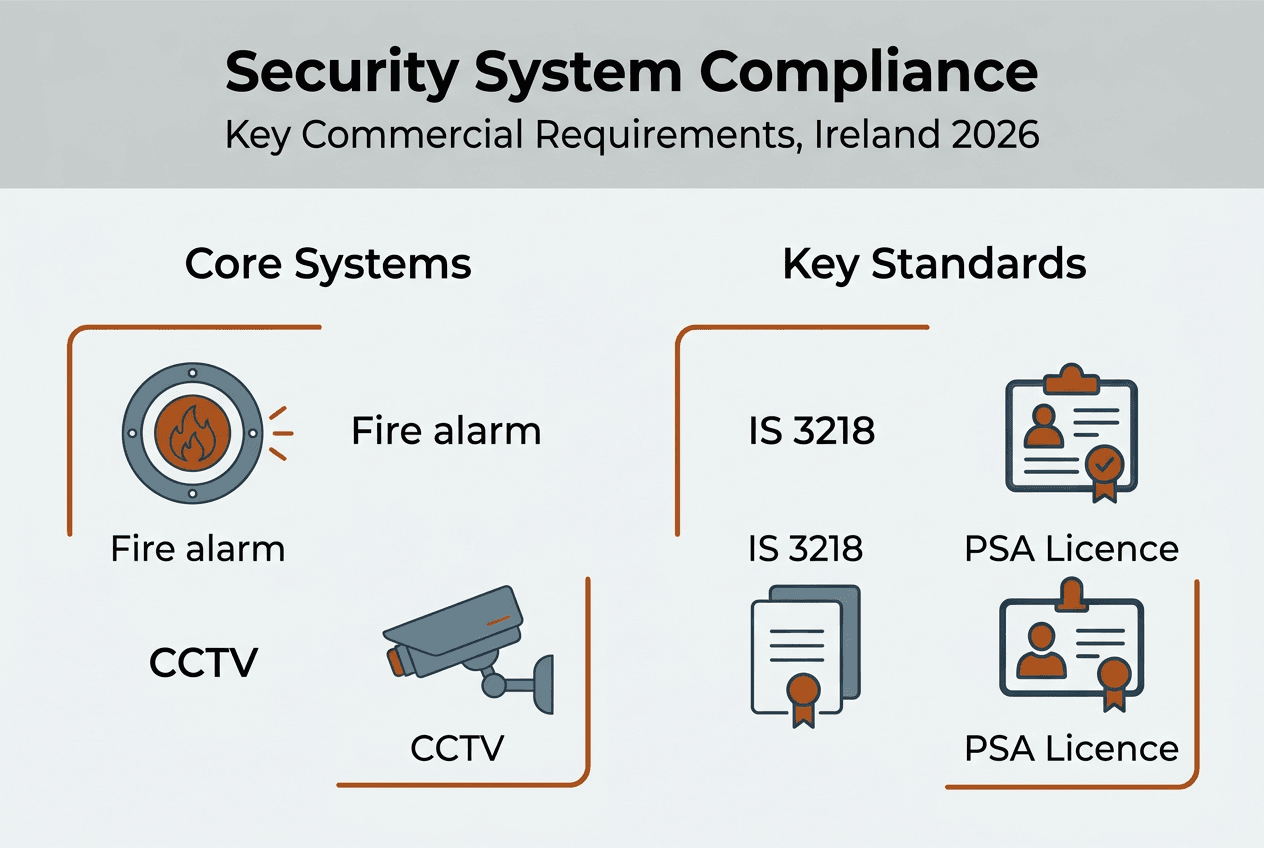
The Private Security Authority regulates security personnel in Ireland, requiring licences for individuals working in various security roles. If your system design includes manned guarding or monitoring stations, verify that personnel hold appropriate PSA licences. This requirement applies to both in house security staff and contracted service providers. Operating without proper licensing exposes your business to fines and invalidates insurance coverage.
Security system component comparison:
Component | Primary Function | Compliance Role | Typical Cost Range |
Fire alarm system | Detect and alert occupants to fire | Mandatory under Building Regulations Part B | €2,000 to €15,000 |
CCTV surveillance | Monitor and record activity | Supports evidence gathering and deterrence | €1,500 to €10,000 |
Access control | Manage entry to restricted areas | Demonstrates security measures for insurance | €1,000 to €8,000 |
Intruder alarm | Detect unauthorised entry | Reduces insurance premiums | €800 to €5,000 |
Creating a tailored security design proposal involves several key steps. Start by documenting your risk assessment findings and identifying gaps in current protection. Research relevant Irish standards and certification requirements for your building type and use. Consult with professional installers who can recommend appropriate equipment and system configurations. Obtain detailed quotes that specify equipment models, installation scope, and ongoing maintenance costs.
Integration between different security components amplifies overall effectiveness. Modern systems allow fire alarms to trigger CCTV recording, access control to disable during fire evacuations, and intruder alarms to activate specific camera views. This coordination creates a comprehensive security response that addresses multiple scenarios simultaneously.
Pro Tip: Design your security system with future expansion in mind by selecting scalable platforms that accommodate additional devices and features. Installing conduit and cabling infrastructure during initial construction or renovation proves far more cost effective than retrofitting later, even if you do not immediately populate all planned locations with devices.
Your security design should balance immediate needs with long term business plans. A growing business benefits from systems that easily accommodate additional locations, users, or monitoring points. Conversely, over specifying unnecessarily complex systems wastes resources and complicates operation. Professional security consultants help navigate these decisions, ensuring your investment delivers optimal protection without excessive cost. Understanding business security essentials provides a foundation for making informed design choices.
Secure your business with compliant fire and security solutions
Protecting your commercial premises requires more than simply installing equipment and hoping for the best. Professional installation ensures systems function correctly from day one, whilst ongoing monitoring and maintenance keep protection levels high as regulations evolve. Signal Fire & Security specialises in designing, installing, and maintaining integrated fire and security solutions tailored to Irish commercial properties.
Our team stays current with the latest Irish fire safety and security regulations, ensuring your systems meet 2026 compliance standards. From comprehensive fire alarm installation in Dublin to sophisticated intruder alarm systems, we deliver solutions that protect your business, satisfy insurers, and provide peace of mind. Our security system monitoring services offer 24/7 professional oversight, ensuring rapid response when incidents occur. Contact our experts today to discuss how we can secure your premises whilst keeping you compliant with Irish fire and security regulations.
Frequently asked questions about security systems in Ireland
What does a Fire Safety Certificate cover and who needs one?
A Fire Safety Certificate confirms that building plans comply with fire safety requirements under Building Regulations Part B. You need one when constructing new commercial buildings, making material alterations that affect fire safety, or changing building use in ways that impact fire risk. The certificate covers structural fire resistance, means of escape, fire detection systems, and emergency lighting provisions.
How often must fire alarms be maintained in Irish commercial premises?
Irish Standard IS 3218 requires weekly testing of fire alarm sounders and call points, quarterly inspection of detection devices, and annual comprehensive servicing by certified technicians. All tests and maintenance must be documented in a logbook available for fire authority inspection. More frequent servicing may be necessary in high risk environments or buildings with complex systems.
What role does the Private Security Authority licence play in commercial security?
The Private Security Authority regulates individuals working in security roles throughout Ireland. Security personnel including door supervisors, security guards, and CCTV operators must hold valid PSA licences to work legally. Business owners employing unlicensed security staff face fines and potential criminal prosecution. Always verify that contracted security providers employ properly licensed personnel.
How do integrated security systems improve emergency response?
Integrated systems coordinate responses across multiple security components simultaneously. When fire alarms activate, integrated systems can unlock access control doors to facilitate evacuation, trigger CCTV recording to document the incident, and send alerts to monitoring centres for immediate emergency service notification. This coordination reduces response times and ensures appropriate actions occur automatically without requiring manual intervention during high stress situations.
What steps should businesses take to stay compliant with updated Irish safety laws?
Maintain regular contact with certified service providers who monitor regulatory changes and can advise on compliance requirements. Schedule annual reviews of your fire safety risk assessment and update it whenever building use or layout changes. Keep detailed maintenance records and ensure all system components meet current Irish standards. Subscribe to updates from the Department of Housing, Local Government and Heritage, and budget for system upgrades when regulations change. Professional fire alarm maintenance contracts often include compliance monitoring as part of their service offering.
Recommended


Comments